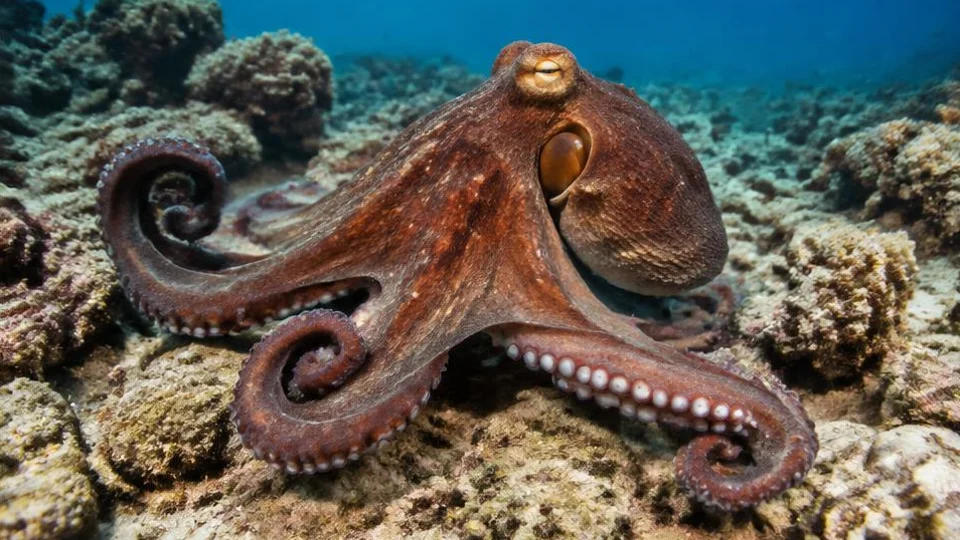
An octopus can look like a moving puzzle: arms exploring in different directions, skin changing appearance, and a soft body disappearing into a rocky gap. The surprising part is not that it possesses supernatural abilities, but that its anatomy solves familiar problems in unfamiliar ways. Finding food, avoiding predators, and coordinating movement all work differently when an animal has flexible arms rather than a rigid skeleton. Understanding those differences makes octopuses more remarkable—and helps separate well-supported observations from catchy claims about brains, blood, and intelligence.
Key takeaways
- Octopuses are cephalopod molluscs with eight arms, not the additional feeding tentacles associated with squid.
- Their nervous systems distribute substantial processing into the arms, without giving each arm an independent mind.
- Camouflage combines changes in skin appearance with posture and behavior; squeezing through gaps has anatomical limits.
- Tool use, brooding, and lifespan need species-specific explanations, not sweeping claims about every octopus.
Arms, tentacles, and the surprising mollusc connection
An octopus belongs to the molluscs, the broad animal group that also includes snails and clams. More specifically, it is a cephalopod, alongside squid, cuttlefish, and nautiluses. That relationship can seem counterintuitive because a typical octopus lacks the conspicuous external shell people associate with molluscs. Classification reflects evolutionary relationships, however, not simply outward resemblance.
Why “eight tentacles” is misleading
The appendages of an octopus are arms. Squid generally have arms plus additional specialized feeding tentacles; those extra tentacles are not part of the octopus body plan. Keeping the terms distinct makes comparisons between cephalopods clearer.
An arm is also much more than a dangling rope. Its muscles can bend, shorten, lengthen, and twist it, while suckers provide contact with surrounding surfaces. This makes reaching and gripping highly adaptable, but it creates a coordination challenge: the animal must control a body with no fixed elbow or wrist positions to simplify movement.
Many neurons in the arms, not independent brains
A substantial share of an octopus’s neurons lies outside its central brain, especially in the arms. A frequently cited approximation is two thirds, although the proportion depends on the species and should not be treated as a universal measurement.
This arrangement supports local sensory processing and movement control. An arm can respond to contact without requiring the central brain to specify every muscular adjustment. The central nervous system still matters: distributed processing does not mean that the arms are separate animals with separate intentions.
A better mental model
Think of coordinated control with some decisions handled locally, rather than “nine independent brains.” Even that comparison is only an explanatory aid, not a literal description of how an octopus experiences its surroundings.
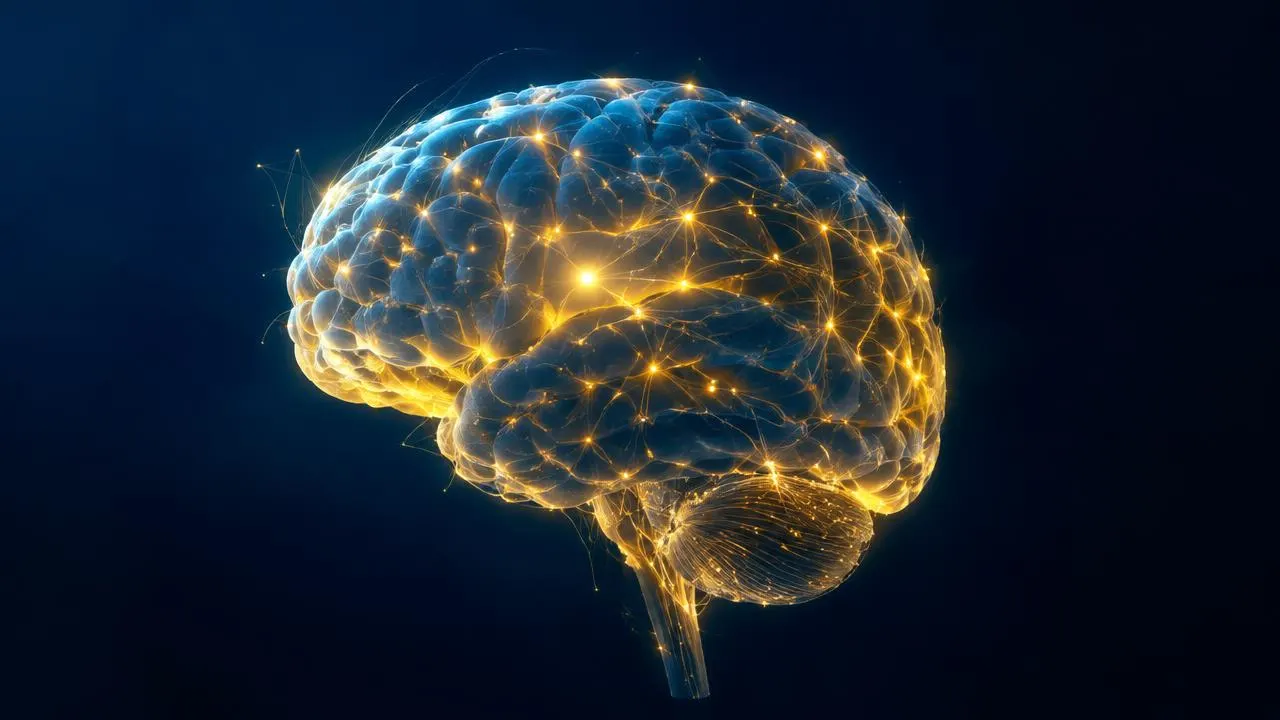
For readers comparing animal nervous systems, these facts about the human brain offer a useful contrast. Similar tasks, such as sensing and moving, can be organized differently. Octopus intelligence should therefore be examined through what animals actually do, rather than by forcing their anatomy into a human-centered template.
Blue blood and hearts with different jobs
Octopuses have three hearts. The branchial hearts move blood through the gills, where oxygen enters the circulation. The systemic heart then pumps oxygenated blood around the body. These are complementary roles within a circulatory system, not spare hearts waiting to take over if another stops working.
Their blood uses hemocyanin, an oxygen-carrying protein containing copper. When oxygenated, hemocyanin gives the blood a blue appearance. Human blood instead relies on iron-containing hemoglobin. The important distinction is the chemistry of oxygen transport, not an animal somehow borrowing the color of seawater.
Blood color is not the same thing as skin color. An octopus appearing brown, pale, or reddish is showing the effects of its skin structures and the surrounding light, not displaying its circulating blood as a changing surface pattern. Separating those mechanisms prevents a memorable fact about blue blood from becoming an inaccurate explanation for camouflage.
Camouflage is an active skin display
Octopus skin contains chromatophores: small pigment-bearing structures whose visible area can change under muscular control. Expanding a chromatophore makes its pigment more prominent; contracting it reduces that contribution to the skin’s appearance. Coordinated changes across the body produce patterns rather than merely switching the animal between uniform colors.
Other skin structures contribute to reflected light, and some octopuses can alter surface texture. Posture also matters. A body pressed against rock presents a different outline from an animal stretching its arms across open sand. Effective concealment can therefore involve color, pattern, texture, shape, and position together.
A practical observation exercise
Illustrative example: While watching aquarium footage, compare an octopus resting on rock with the same animal moving onto sand. Look separately at its outline, pale and dark patches, and apparent skin texture. Do not assume every visible change serves camouflage: skin displays can also occur in other contexts. Lighting, camera exposure, and the background can change what a viewer perceives.
A flexible body still has a hard limit
Without a rigid internal skeleton or a typical external shell, an octopus can reshape much of its body to enter narrow spaces. Its arms can explore an opening before the rest of the animal follows. That flexibility helps explain why an apparently substantial animal may vanish into a crevice that looked unpromising.
But “it can fit through any hole” goes too far. The hard beak, situated at the mouth where the arms meet, is an important constraint. Soft tissues can deform in ways the beak cannot. An opening’s shape and the animal’s condition also matter, so a simple visual rule cannot guarantee passage.
Habitat adds context to these abilities. Rocky shelters offer different opportunities from exposed seafloor, and octopuses do not all occupy the same environment. Readers exploring the conditions of the deep ocean should avoid assuming that every octopus lives there—or faces the same light levels, temperatures, and shelter choices.
Intelligence and reproduction need species-level care
Octopuses attract attention for problem-solving, exploration, and unusual interactions with objects. Some species have been observed collecting and using portable shelter materials, behavior discussed as tool use. That does not establish that all octopuses use tools, or that every object an octopus moves is a tool.
The useful questions are concrete: What did the animal do? What function did the object serve? Was the behavior observed repeatedly, and in which species? A striking video can show an event without establishing how common it is.
Brooding is not a universal timetable
Many female octopuses tend their eggs, protecting and ventilating them during development. In many species, reproduction is followed by decline and death, but the details of brooding and life history vary.
Lifespan also differs among species and environmental conditions. Avoid turning a familiar aquarium species into a model for the whole group. Claims about maternal behavior are most informative when they identify the species and distinguish direct observation from assumptions about motivation or emotion.
Frequently asked questions
Can octopus arms act without instructions from the brain?
Their local nervous systems can process sensory information and coordinate aspects of movement, reducing the need for detailed central instructions. That is not the same as complete independence. Normal behavior involves communication and coordination across the animal, so “arms with their own minds” is a colorful but misleading shortcut.
Does blue blood help an octopus change color?
No: these facts involve different mechanisms. Oxygenated hemocyanin accounts for the blue appearance of the blood, while chromatophores and other skin structures influence the visible surface. Camouflage also depends on pattern, texture, posture, and surroundings. Linking blood color directly to a changing skin display confuses circulation with appearance.
Are all octopuses short-lived?
There is no single lifespan that accurately describes all octopuses. Species differ, and development and survival depend partly on environmental conditions. Many have life histories closely tied to a reproductive episode, but a general statement should not replace species information. Check which octopus a lifespan claim actually describes before repeating it.
What should I do if I see an octopus outdoors?
Watch quietly from a distance without touching, chasing, feeding, or blocking its route to shelter. Do not reach into its den or move rocks to improve the view. If photographing it, keep your observation brief and unobtrusive. A concealed or retreating animal is not an invitation to coax it out.
Let the octopus remain an animal
The best octopus facts explain mechanisms without replacing them with myths. Notice how an arm explores, how a pattern changes, or how shelter shapes behavior. Careful observation is rewarding precisely because an octopus is neither a miniature human nor a collection of independent minds.
Sources and further reading
- Smithsonian Ocean: Octopuses, Squids, and Relatives
- Smithsonian Ocean: Why the Octopus Brain Is So Extraordinary

Written by
FactNest Editorial Team
FactNest is operated by Muonix. The FactNest Editorial Team publishes general-interest explainers with AI-assisted drafting and illustrations. Contact contact@muonix.co for questions or corrections; we respond within 2 business days.
More from this author →