A spoonful of honey starts as a much thinner liquid inside flowers. Getting from that watery nectar to a concentrated food reserve requires collection, transport, chemical changes and careful water removal. Honeybees share this work across the colony, using their bodies and the comb as parts of the process. The result is not simply flower juice placed in a wax container. It is nectar transformed into a store of energy that the colony can draw on when fresh food is difficult to find.
Key takeaways
- Honeybees make honey as colony food; honey production is not a trait shared by all bees.
- Nectar travels in a crop, or honey stomach, separate from the bee’s main digestive stomach.
- Enzymes change nectar’s sugars, while evaporation and air movement reduce its water content.
- Wax cells hold the developing honey. Capping helps protect the finished reserve, but honey still needs suitable storage after harvest.
Flowers supply nectar, not ready-made honey
Flowers offer nectar as a reward for visiting animals that may carry pollen between blooms. Nectar is a sugary liquid, but its composition and concentration vary with the plant and conditions. A foraging honeybee drinks accessible nectar with its mouthparts and carries it back toward the colony.
This exchange connects the plant’s reproduction with the bee’s search for fuel. It is different from the signals described in how plants communicate with each other: here, the useful starting point is a food reward that brings a visitor to a flower.
Nectar and pollen have different jobs
Pollen is not the primary ingredient from which honey is made. It supplies protein and other nutrients important to colony life, particularly the raising of young bees. Nectar chiefly supplies sugars for energy. Bees may collect both resources, and small amounts of pollen can occur in honey, but that does not make honey a product of ground-up pollen.
The honey stomach is a transport compartment
A nectar collector stores its load in the crop, often called the honey stomach. This expandable compartment belongs to the digestive tract, but it is distinct from the stomach where food undergoes the main processes of digestion. That separation allows a bee to carry nectar home rather than immediately digesting the whole load.
The distinction also explains why calling honey “bee vomit” is more distracting than informative. Nectar is brought back through the mouth during transfer, but it has been carried in a specialised storage compartment. The important story is controlled transport and processing, not a comparison with human illness.
A forager also needs energy for its own activities. Carrying nectar for the colony and using sugars as fuel are related needs, not contradictory ones. Once the bee returns, nectar can be passed to another worker, allowing collection outside and processing inside to proceed as shared tasks.
Workers change the sugars as they share nectar
Inside the hive, returning foragers transfer nectar to other workers through their mouthparts. The receiving bees continue handling it and placing it in comb cells. Processing is a colony activity rather than a single bee completing an isolated batch from flower to sealed cell.
What enzymes actually do
Enzymes introduced by bees help change the nectar’s chemistry. In particular, the enzyme invertase breaks sucrose into the simpler sugars glucose and fructose. Nectar already contains a mixture of sugars, so this is not a transformation from “no sugar” into sugar. It changes the balance and form of sugars already present.
Chemical processing and water loss overlap. There is no need to imagine a rigid production line in which every drop finishes one stage before beginning the next. Bees handle a variable raw material, and the developing honey gradually takes on the composition and concentration suitable for storage. Enzymes alone cannot produce that concentration: removing water remains essential.
Evaporation turns watery nectar into concentrated food
Fresh nectar contains water that the colony does not need to keep in its final food reserve. As bees handle nectar and distribute it in cells, water can escape into the surrounding air. Workers also fan their wings, helping move air through the hive and supporting evaporation.
Fanning does not suck water out of nectar or boil it away. It assists an ordinary physical process: water leaves an exposed liquid surface as vapour. Air movement helps carry that moisture away, while conditions within and outside the hive influence how readily drying proceeds.
A hypothetical kitchen comparison
Imagine equal amounts of a watery sugar solution in a shallow dish and a narrow cup. Under otherwise similar conditions, the dish exposes more liquid surface to air and can lose water more readily. This is an illustrative comparison, not an instruction for making honey. It helps explain why exposure and airflow matter alongside the bees’ chemical processing.
Wax cells hold a reserve for the colony
Honeycomb provides a framework of wax cells in which bees can deposit and store food. Workers produce the wax used to construct it. Wax is therefore the building material around honey, not the substance into which nectar changes. The contents and the container have different origins and functions.
As honey becomes sufficiently concentrated, workers cover storage cells with wax caps. These caps help protect the reserve and limit its exposure to humid air. A capped cell is a storage stage, not evidence that the colony has made food specifically for people.
Honey provides energy when flowers are scarce or weather restricts foraging. Depending on local conditions, difficult periods need not look like a cold winter. Thinking of honey as colony supplies makes its purpose clearer: the bees are preserving access to floral energy beyond the moment when nectar is available.
That reserve depends on collective activity. No individual worker needs to carry out every part of the process for the colony to maintain its stores.
Read the story in flowers and comb photographs
The floral sources of nectar help shape honey’s flavour and aroma. Different sources can also contribute to differences in colour. A colony may visit several kinds of flowers, so a jar should not automatically be imagined as the product of a single plant species. Colour alone cannot reliably identify its botanical origin.
Observe without opening a hive
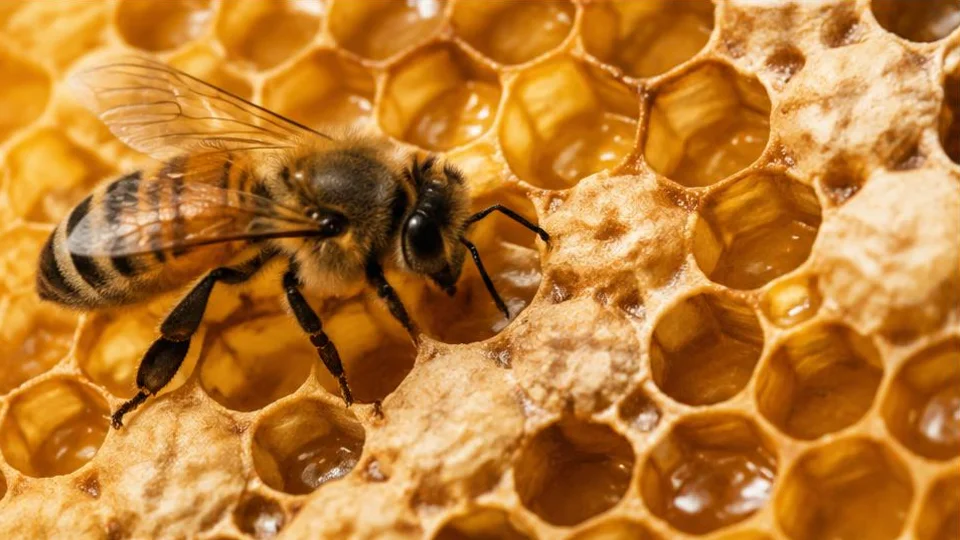
Use clear comb photographs to compare open cells with capped areas. Open cells may show reflective liquid; capped stores have wax coverings. Photographs have limits, however: they cannot establish moisture content, and not every capped area contains honey. Brood cells are capped too, so captions and context matter.
Outdoors, watch flower visitors from a respectful distance without blocking their movement. Visible pollen loads show pollen collection, not the amount of nectar a bee carries internally. Do not disturb hives to inspect the process.
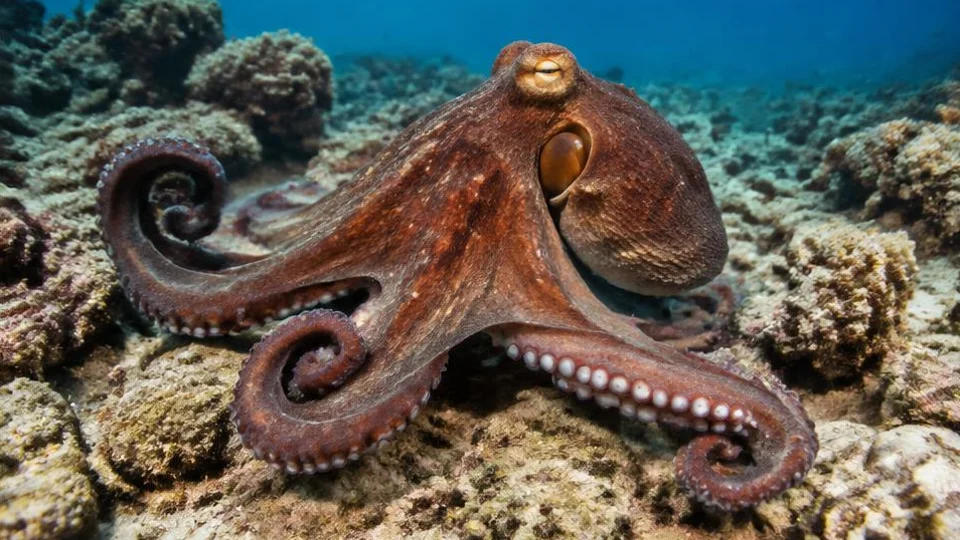
For a contrasting example of animal behaviour, surprising facts about octopuses offers a useful change of scale: an individual animal rather than the distributed work of a honeybee colony.
Frequently asked questions
Do all bees make honey?
No. Honey-making should not be treated as a defining activity of every bee. Honeybees build substantial shared food reserves, but many other bees have different nesting arrangements and ways of provisioning their young. Seeing a bee on a flower therefore does not establish that it is collecting nectar for a honey-filled colony.
Is honey mostly made from pollen?
No. Nectar supplies the main raw material for the honey described here. Pollen has a different nutritional role, providing protein and other nutrients to the colony. Small amounts can find their way into honey, but their presence does not mean bees turn pollen into the sugary liquid stored in comb.
How long does nectar take to become honey?
There is no single dependable timetable for every load. Nectar starts with varying amounts of water and different sugar mixtures, while humidity, airflow and colony activity affect processing. The useful distinction is between incoming nectar and a sufficiently concentrated store, rather than a fixed countdown that applies to every hive.
Can honey spoil after it is harvested?
Honey’s concentrated sugars and low available water discourage many microbes, but “never spoils” is too absolute. Honey can absorb moisture, and sufficiently diluted honey can ferment. Keep it in a clean, tightly closed container away from moisture. Crystallisation alone is different from spoilage: sugars forming crystals do not necessarily mean the honey has gone bad.
A food store built from floral energy
The next time you see honey in a comb, distinguish the nectar source, the processing workers and the wax structure. Each solves a different problem: finding energy, concentrating it and keeping it available. Together, they turn a temporary floral reward into a colony reserve.
Sources and further reading

Written by
FactNest Editorial Team
FactNest is operated by Muonix. The FactNest Editorial Team publishes general-interest explainers with AI-assisted drafting and illustrations. Contact contact@muonix.co for questions or corrections; we respond within 2 business days.
More from this author →