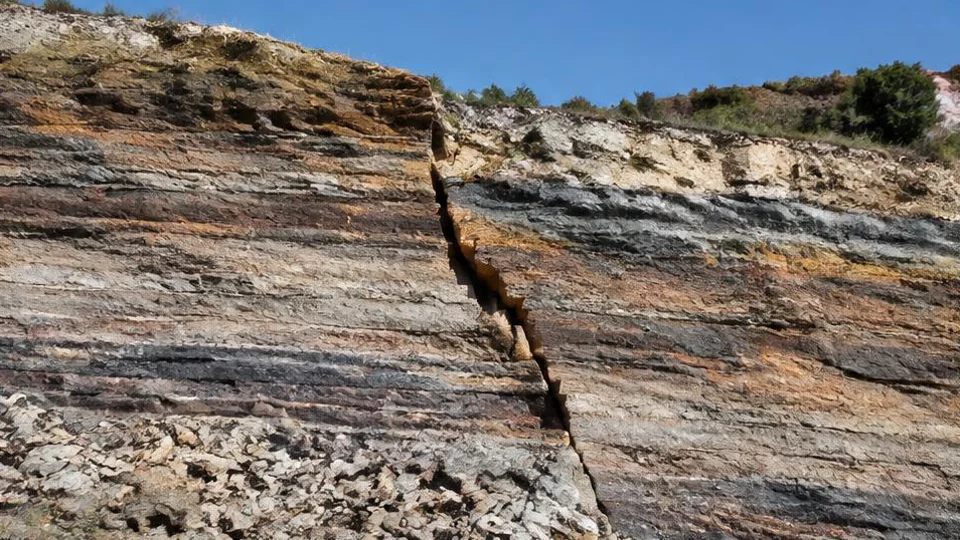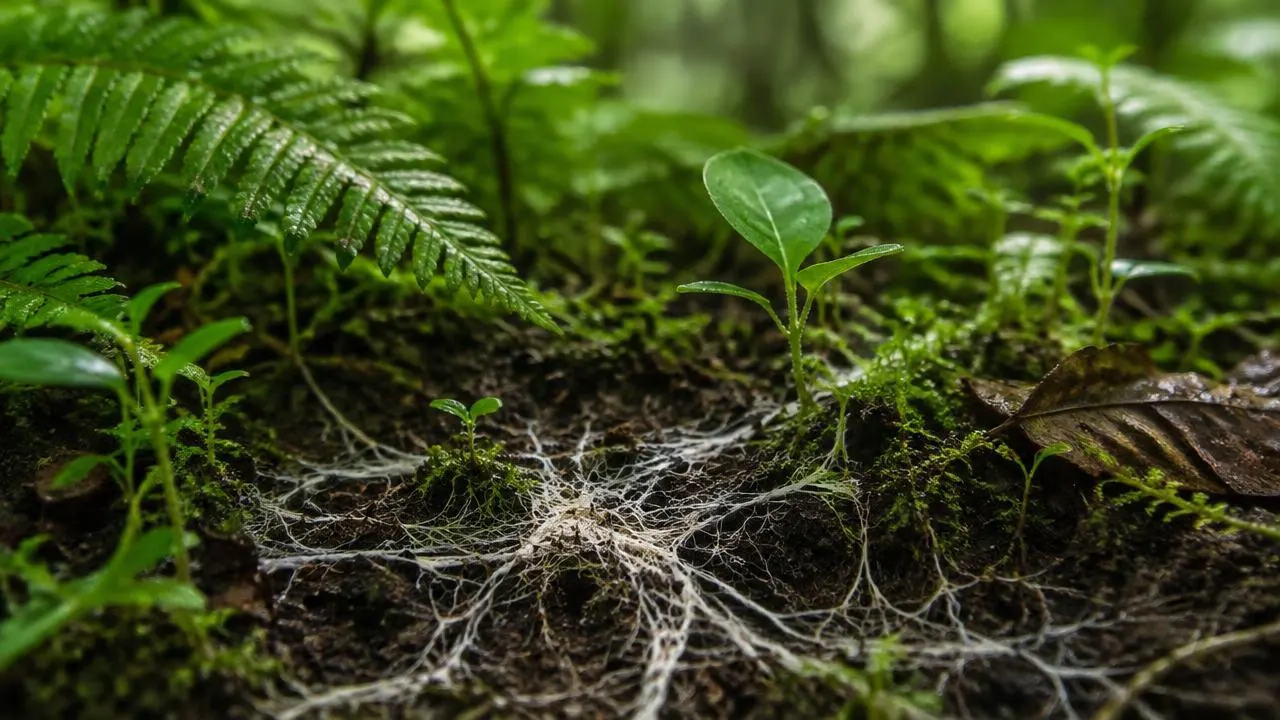
A damaged leaf can release chemicals that influence nearby plants. Roots alter their surroundings, and fungi sometimes connect different root systems. These are remarkable biological processes, but describing them as conversation can create expectations the evidence does not support.
Plants exchange and respond to information without words, brains, or demonstrated human-like intentions. Understanding their mechanisms is more useful than imagining a forest behaving like a group chat.
Key takeaways
- Plants can respond to airborne chemicals and changes around their roots.
- A chemical cue is not necessarily an intentional warning or an evolved signal.
- Fungal connections exist, but sweeping “wood wide web” claims exceed current evidence.
- Responses depend on species, distance, environment, and experimental conditions.
- Plant responsiveness does not establish consciousness.
What scientists mean by communication
In everyday language, communication suggests a sender choosing a message and a receiver understanding it. Biological communication does not require either conscious choice or language.
Researchers often distinguish signals from cues. A signal has evolved, at least in part, because of its effects on receivers. A cue provides useful information even if producing that information was not its evolved function.
A damaged plant, for example, might release a compound that a neighboring plant can detect. Calling that compound a “warning” may be convenient, but demonstrating a receiver’s response does not establish that the emitter evolved to warn neighbors.
This distinction is especially important when a response benefits the receiver while offering no demonstrated benefit to the plant releasing the chemical.
Airborne chemicals can change neighboring plants
Volatile compounds carry information
Plants emit volatile organic compounds: chemicals that evaporate readily and move through air. Some create familiar floral scents; others are released or change in concentration after injury or insect feeding.
Kew describes plant scents as complex chemical blends that influence interactions with pollinators and herbivores. source Plant-to-plant effects are another part of this chemically active environment, rather than a completely separate messaging system.
In experiments involving certain species, exposure to compounds from damaged plants can alter a neighbor’s defense-related chemistry or gene activity. The result may be immediate defensive activity or preparation for a later attack.
Priming is preparation, not full mobilization
A primed plant may respond more rapidly or strongly when subsequently attacked. It has not necessarily produced all its costly defenses in advance.
An illustrative experiment might place an undamaged plant downwind from a damaged one, then expose both that receiver and an unexposed control plant to herbivores. Researchers can compare defense chemistry, insect performance, and damage.
The design needs controls for airflow, handling, light, and other differences. Otherwise, an apparent chemical effect could reflect an unrelated feature of the setup.
Even a convincing result applies first to the tested species and conditions. It does not show that every neighboring plant receives a useful warning in every habitat.
Distance, weather, and chemical context matter
A leaf’s emissions disperse into a moving, reactive atmosphere. Wind direction affects where compounds travel; dilution and chemical breakdown affect whether concentrations remain biologically meaningful.
A response observed in a small chamber may therefore differ from one in an open field. Conversely, a close canopy or sheltered microenvironment may retain chemicals differently from exposed ground.
The blend matters as well as the presence of one molecule. Plants encounter emissions from neighbors, microbes, herbivores, and themselves. Responding appropriately requires mechanisms sensitive to this background rather than treating every odor as an emergency.
Kew’s discussion of plant odors describes an ecological information contest in which herbivores use scents to locate food while some plants become harder to detect. source
Plants also influence insects that affect their neighbors
A plant’s chemical emissions can attract natural enemies of the herbivores feeding on it. Certain parasitoid wasps, for example, use plant-associated odors when searching for hosts.
That is not direct conversation between two plants. It is a three-way ecological interaction involving a plant, an herbivore, and an organism attacking the herbivore.
Such interactions can indirectly change the damage experienced by nearby plants. However, attracting an insect does not guarantee successful protection. The predator or parasitoid must arrive, find suitable prey or hosts, and remain effective under local conditions.
This is why a promising chemical mechanism does not automatically become a reliable pest-management technique. Agricultural outcomes require field testing across variable weather, pests, crop varieties, and surrounding habitats.
Roots create a chemically active neighborhood
Roots release substances into the soil, including sugars, organic acids, and many other compounds. These exudates help shape microbial communities and nutrient availability.
Other roots may respond to chemical conditions associated with nearby plants. Experiments sometimes detect differences in growth or allocation depending on the identity or relatedness of neighbors, although interpretations and generality vary.
Competition complicates the picture. A root may grow differently because a neighbor depleted water or nutrients, not because it received a specialized identity signal.
Soil microbes further transform compounds, and the soil itself can bind or slow their movement. Establishing direct root-to-root communication requires separating these routes rather than assuming every neighbor-dependent response represents a message.
What fungal networks actually establish
Mycorrhizal fungi associate with plant roots. In many such relationships, plants supply carbon compounds while fungi help acquire nutrients. Fungal threads, called hyphae, can connect roots belonging to multiple plants.
Those connections are real. What remains disputed is how widespread particular networks are in natural forests, how materials move through them, and what consequences follow for the connected plants.
A critical review by Justine Karst, Melanie Jones, and Jason Hoeksema found insufficient support for several broad claims about common mycorrhizal networks. It also identified overinterpretation and citation bias. source
This critique does not mean fungi are unimportant. It means the existence of a connection cannot establish every proposed function attributed to it.
Detecting transfer is not proving assistance
Researchers can label carbon or nutrients and later detect the label elsewhere. That can demonstrate movement, but identifying the exact route may require excluding alternatives such as soil water, decomposing material, or microbial processing.
Even confirmed fungal transport does not automatically show a meaningful net benefit to the receiving plant. The amount transferred, its costs, and its effect on growth or survival must be measured.
Fungi also have their own evolutionary interests. Treating them as passive cables between generous trees ignores that they are living organisms allocating resources within their own relationships.
Be cautious with “mother tree” narratives
Claims that mature trees deliberately feed offspring or send them targeted warnings are stronger than current evidence supports. The 2023 review found no published peer-reviewed evidence for preferential sending of resources and defense signals to offspring through these networks.
A large tree can influence seedlings through shade, moisture, litter, seed supply, and many other pathways. Demonstrating a special fungal mechanism requires distinguishing it from those effects.
Forest protection remains important without assuming trees behave like human families. Biodiversity, habitat, carbon storage, and ecological resilience provide substantial reasons to conserve forests independently of that narrative.
Electrical activity does not demonstrate consciousness
Plants use electrical and calcium-related signaling within their own bodies. These processes help coordinate responses to damage and environmental change.
An internal signal moving from an injured leaf to another part of the same plant is different from information passing between separate plants. Neither process, by itself, demonstrates subjective experience.
Terms such as memory and learning can describe carefully defined experimental patterns, but they become misleading when presented as proof that plants think or feel like humans. Complex regulation exists throughout biology without requiring a brain-like explanation.
FAQ
Can plants warn one another about insects?
In some tested systems, chemicals associated with damage can prepare neighboring plants for later attack. “Warning” is shorthand; intentional assistance has not thereby been demonstrated.
Is the wood wide web completely imaginary?
No. Fungal connections between plants exist. The misleading part is treating them as a universal, cooperative internet whose benefits and messages are already well established.
Should gardeners damage one plant to protect others?
There is no general recommendation to do so. Effects are species-specific and uncertain, while injury creates real costs. Use evidence-based pest monitoring and management instead.
Does talking to houseplants help them grow?
There is no solid basis for assuming plants understand speech. Careful attention can help indirectly because it encourages appropriate watering, light assessment, and early detection of pests.
What to remember
Plants live in an information-rich world of chemicals, organisms, and changing conditions. Their responses are impressive without human-like conversation or consciousness. Read the Kew explanations and network review linked above with one recurring question: what mechanism was actually demonstrated, and how far does the evidence justify generalizing it?

Written by
FactNest Editorial Team
FactNest is operated by Muonix. The FactNest Editorial Team publishes general-interest explainers with AI-assisted drafting and illustrations. Contact contact@muonix.co for questions or corrections; we respond within 2 business days.
More from this author →