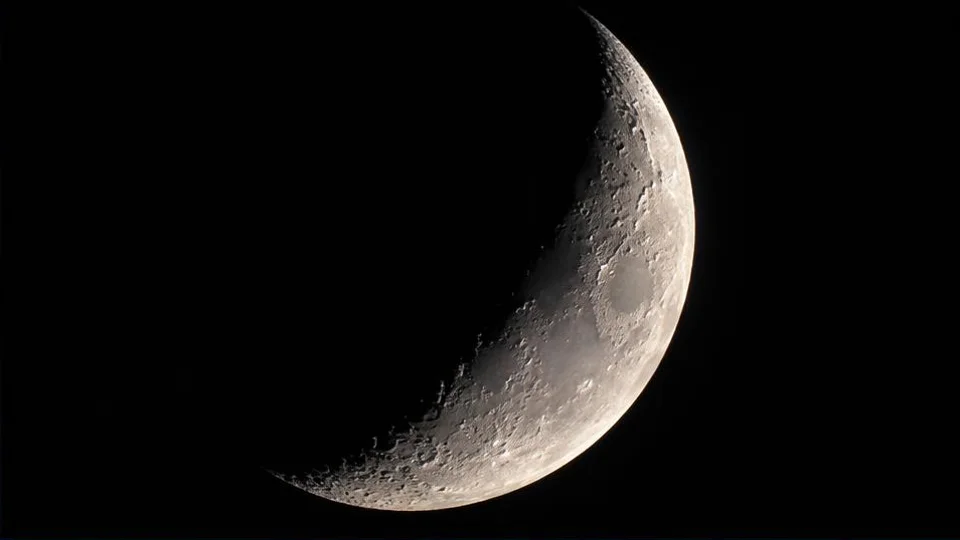
Space is not simply a dark backdrop containing stars. It is the setting for an evolving universe with a measurable history, immense structures, unfamiliar worlds, and major unanswered questions. Some of its most surprising features become clearer when everyday words such as “empty,” “old,” and “far” are examined carefully.
The facts below focus on ideas that remain useful beyond any single discovery announcement. They also distinguish direct observations from interpretations and open questions. Astronomy is powerful because it combines all three without treating them as interchangeable.
Key takeaways
- Looking far into space means receiving light from the past.
- The universe is approximately 13.8 billion years old.
- Planets exist around other stars and can also travel without one.
- Ordinary matter is only a small part of the cosmic inventory.
- Important questions about dark matter and dark energy remain unresolved.
1. Space is much closer than the stars
A commonly used boundary of space lies about 100 kilometers, or 62 miles, above Earth's surface. NASA uses this scale to illustrate how close space is compared with astronomical distances. It is a convention, not a sharp physical wall where the atmosphere abruptly stops. source
Earth's atmosphere gradually thins with altitude. The challenge of reaching orbit is therefore not simply traveling upward to a particular height. A spacecraft must also gain enough sideways speed to keep falling around Earth rather than returning immediately to the ground.
A useful comparison is the difference between climbing to the top of a hill and circling the entire landscape without touching it. Altitude and orbital motion answer different questions, even though both appear in discussions of spaceflight.
2. The universe has a measurable age
Current cosmological models place the universe's age at approximately 13.8 billion years. That estimate emerges from observations interpreted through models of cosmic expansion and evolution. It does not come from finding a single oldest object and using that as a cosmic stopwatch. source
The early universe was hot and dense. As it expanded and cooled, conditions changed enough for particles, atomic nuclei, and eventually neutral atoms to form. Stars and galaxies appeared later.
Calling the big bang an explosion into a preexisting empty room creates a misleading picture. The model describes the evolution and expansion of space itself. Questions about the earliest conditions, including proposed inflation, remain active areas of research rather than a fully observed opening scene.
3. Telescopes receive messages from the past
Light takes time to travel. Moonlight reaches Earth after roughly a second, while sunlight takes about eight minutes. Light from distant stars may travel for years, and light from remote galaxies can travel for billions of years.
A telescope does not need to invent a historical reconstruction to see a distant galaxy's earlier state. The arriving light is already old. Increasing sensitivity allows astronomers to collect fainter signals, including some emitted when the universe was much younger.
This does not mean every distant object is visible as it looked at one simple distance divided by light speed. Across cosmological scales, expansion complicates the relationship between travel time and distance. Astronomers therefore distinguish several useful distance definitions rather than relying on one universal ruler.
4. A light-year measures distance, not time
A light-year is the distance light travels in a vacuum during one year: approximately 9.46 trillion kilometers. The word “year” can make it sound like an age, but the complete term specifies a length.
If a hypothetical star is ten light-years away, light arriving from it has traveled for about ten years under a simple nearby-space approximation. That makes the unit convenient because it links distance with the age of the signal.
For a practical reading rule, separate statements about an object's age from statements about its distance. A star described as several billion years old is not necessarily several billion light-years away. These numbers describe different properties and need different evidence.
5. Planets are not unique to our solar system
An exoplanet is a planet beyond our solar system. Astronomers have confirmed thousands, demonstrating that planetary systems are a widespread feature of the galaxy rather than an assumption based only on our own neighborhood. Most known exoplanets orbit stars, but some planets are free-floating. source
One major discovery method looks for a small, repeated decrease in starlight when a planet crosses in front of its star from our viewpoint. Another detects changes in a star's motion caused by an orbiting planet's gravitational influence.
Neither method provides a straightforward photograph of a familiar globe. Measurements constrain properties such as orbital period, size, or mass, depending on the technique. Combining methods can reveal more, but many aspects of individual worlds remain uncertain.
6. Some planets have no parent star
Free-floating worlds, often called rogue planets, are not bound in ordinary orbits around a star. Their existence broadens the idea of what a planetary population can look like. NASA includes these unattached worlds in its overview of exoplanets. source
Some may have been expelled from planetary systems through gravitational interactions. Formation histories are not necessarily identical for every object, and classification becomes complicated near the boundary between massive planets and small brown dwarfs.
A rogue planet would not have a familiar annual cycle driven by orbiting its own sun. That does not automatically tell us everything about its temperature or interior, however. Internal heat, atmosphere, mass, and history would all matter when evaluating a particular object.
7. A habitable zone is not proof of habitability
A star's habitable zone is the region where suitable planetary conditions could allow liquid water on a surface. NASA describes it as a useful starting point for considering potentially life-supporting environments, not a certificate that a planet contains water or life. source
A planet's atmosphere, pressure, composition, and climate influence whether surface water can persist. Stellar activity and orbital properties also affect the environment. Location alone cannot settle these questions.
Think of the habitable zone as an address in a broadly favorable neighborhood, not a building inspection. Even a rocky world in that region may be dry, hostile, or wrapped in an unsuitable atmosphere. Conversely, environments beneath icy surfaces raise different questions from those addressed by a surface-water zone.
8. Ordinary matter is not most of the universe
Stars, planets, gas, dust, and people are made from ordinary matter. In the standard cosmological model, however, ordinary matter accounts for only about five percent of the universe's total mass-energy content. Dark matter and dark energy account for most of the remainder. source
These categories should not be confused. Dark matter is inferred through gravitational effects, including its role in galaxies and large-scale structure. Dark energy is the name given to the component associated with accelerated cosmic expansion.
“Dark” does not mean the two are the same substance or merely hidden ordinary objects. The terms identify different scientific problems. Their underlying physical nature remains unresolved, making them central targets of modern astronomy and physics.
9. Cosmic expansion is accelerating
Observations indicate that the universe's expansion has accelerated during its more recent history. NASA describes dark energy as the unknown component associated with that behavior. Explaining the observations is an ongoing scientific challenge, not a solved story about a familiar pushing force. source
Expansion is most relevant across enormous distances between systems that are not gravitationally bound together. It does not mean your body, Earth, or the solar system expands at the same rate as the cosmic scale.
This distinction prevents a common misunderstanding: a universe that expands overall can still contain galaxies, stars, and planetary systems held together by local forces. Different scales involve different dominant behavior.
Frequently asked questions
Is space completely empty?
No. Even regions far from stars can contain particles, radiation, magnetic fields, and other physical content. “Vacuum” usually means extremely low density, not an absolute absence of everything.
Have scientists found life beyond Earth?
There is no confirmed discovery of extraterrestrial life. Potentially habitable environments and intriguing chemical observations are not equivalent to verified organisms or evidence of a civilization.
Is the observable universe the entire universe?
Not necessarily. The observable universe is the region from which signals have had time to reach us within cosmic history. The universe beyond that observational limit may be much larger; its full extent is unknown.
Will exoplanet discovery totals stay the same?
No. Confirmations continue, and catalogs are updated as evidence improves. Broad statements such as “thousands of confirmed exoplanets” are more durable than an undated exact total presented as permanent.
What to remember
Space combines measurable facts with profound unknowns. Light records cosmic history, planets occupy diverse settings, and most of the universe's inferred contents remain poorly understood. The most interesting discoveries often sharpen questions rather than eliminate them.
Sources and further reading

Written by
FactNest Editorial Team
FactNest is operated by Muonix. The FactNest Editorial Team publishes general-interest explainers with AI-assisted drafting and illustrations. Contact contact@muonix.co for questions or corrections; we respond within 2 business days.
More from this author →