The water on Earth is not used up. The same water has been moving around the planet for billions of years, changing form and location in a continuous loop called the water cycle. It connects oceans, clouds, rivers, soil and living things.
Key takeaways
- The Sun's energy drives the water cycle by evaporating water from oceans, lakes and land.
- Water vapour cools and condenses into clouds, then falls as rain, snow or hail.
- Water returns by runoff, infiltration into soil and flow through rivers and groundwater.
- Plants release water vapour through transpiration.
- Most of Earth's water is salty and held in the oceans.
Evaporation and transpiration
Heat from the Sun turns liquid water into vapour, mostly from the surface of the oceans but also from lakes, rivers, wet soil and snow. Plants contribute too: they take up water through their roots and release vapour through tiny leaf pores in a process called transpiration. Scientists often combine the two as evapotranspiration.
Condensation and clouds
Warm air carrying water vapour rises and cools. Cooler air cannot hold as much vapour, so it condenses onto tiny particles such as dust and salt, forming droplets or ice crystals. Billions of these droplets together make a cloud. Dew and fog form by the same process closer to the ground.
Precipitation
When cloud droplets grow large enough or ice crystals become heavy enough, they fall as precipitation. Depending on the temperature of the air they fall through, this can be rain, drizzle, sleet, snow or hail. Where and how much precipitation falls depends on weather systems, mountains and the supply of moisture.
Runoff, infiltration and groundwater
Water that lands on the ground follows several paths. Some flows over the surface as runoff into streams and rivers, which carry it toward lakes and the sea. Some soaks into the soil by infiltration and may be taken up by plant roots or percolate deeper to become groundwater, stored in underground layers of rock and sand called aquifers. Groundwater moves slowly, sometimes emerging again as springs. In cold regions, water may be stored for long periods as snow and glacier ice before melting.
Where the water is
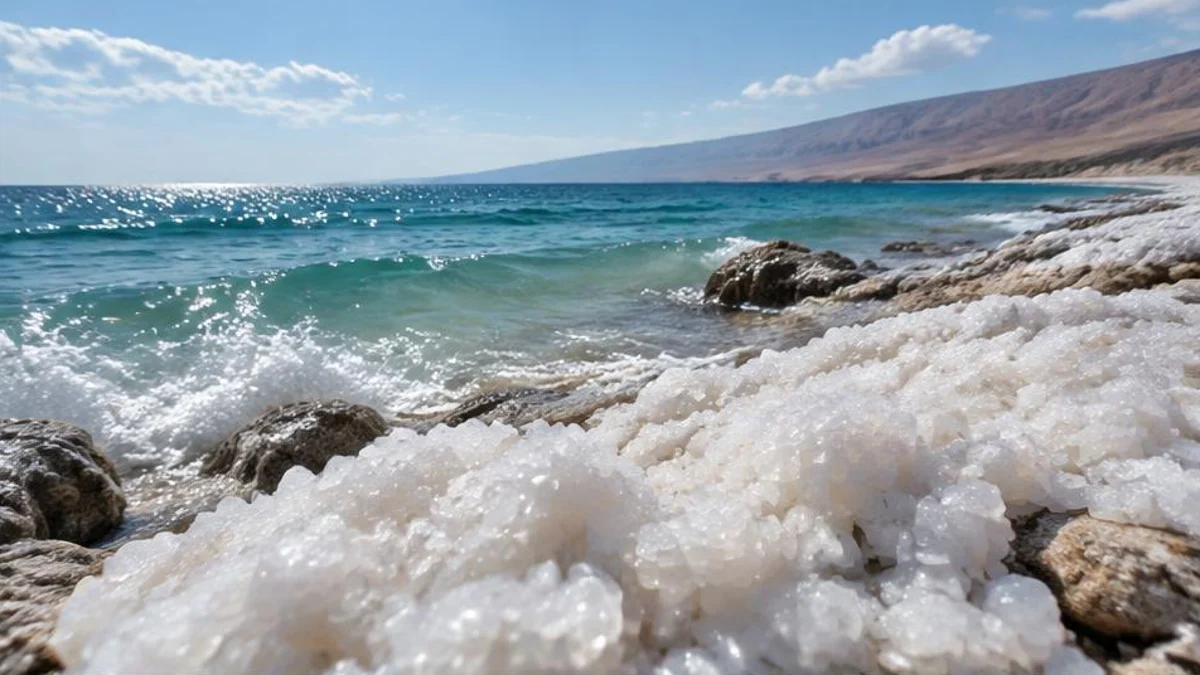
The great majority of Earth's water, about 97 percent, is in the salty oceans. Of the fresh water, most is locked in ice sheets and glaciers or lies underground, and only a very small share is in rivers and lakes at any one time. This is one reason careful water management matters.
Why the cycle matters
The water cycle moves heat around the planet, shapes weather patterns and delivers fresh water to land. It also carries nutrients and sediment, and it feeds ecosystems and agriculture. Human activities such as building cities, draining wetlands and changing land use affect how water flows, and a changing climate alters rainfall patterns and the timing of snowmelt.
How long water stays in each place
The time water spends in a reservoir is called its residence time. In the atmosphere, it is about nine days on average. In rivers it is days to weeks, in lakes years to decades, and in the oceans thousands of years. Groundwater ranges widely, from weeks in shallow aquifers to many thousands of years in deep ones, and some of the water in the great ice sheets fell as snow hundreds of thousands of years ago. These differences matter. Pollution in a river may flush out within weeks, while contamination of a deep aquifer can last for generations.
The cycle and the weather
The water cycle drives much of the weather. Warm, moist air rising along fronts produces clouds and steady rain, and thunderstorms form when strong rising air builds towering clouds. Monsoons are seasonal shifts in winds that bring heavy rainfall to large regions, including South Asia, and they supply water for farming. Atmospheric rivers are long, narrow bands of concentrated moisture that transport water vapour from the tropics to higher latitudes and deliver much of the rain and snow in some regions, such as western North America.
Human influence
People alter the water cycle in many ways. Dams store water and change river flows. Irrigation takes large amounts from rivers and aquifers, and in some areas groundwater is being pumped faster than it is replenished. Cities replace soil with pavement, which sends rain rapidly into drains and rivers instead of letting it soak in, increasing flood risk. Deforestation can change local rainfall because trees release water vapour. Good management, such as protecting wetlands, harvesting rainwater and restoring natural floodplains, can help.
Measuring the cycle
Scientists track water with a range of tools. Rain gauges and river gauges record local amounts, weather radar shows where rain is falling, and satellites measure rainfall, soil moisture, snow cover and even small changes in Earth's gravity that reveal how much water is stored underground, as measured by the GRACE satellites. Long-term records let researchers see trends such as shrinking glaciers or changing snowpack.
Climate change and the cycle
A warmer atmosphere can hold more water vapour, about seven percent more for each degree Celsius of warming. This tends to make heavy rainfall events more intense, while also increasing evaporation and drying in some regions. The overall result is a more variable cycle, with greater risk of both floods and droughts in many places, and shifts in the timing of snowmelt that affect water supplies for farms and cities.
Frequently asked questions
Is the water we drink recycled?
All water is part of the natural cycle, so the water you drink has passed through it many times over Earth's history.
How long does water stay in the atmosphere?
On average only about nine days, which is why weather changes quickly compared with oceans or ice sheets.
Why is the sea salty if rain is fresh?
Rivers carry dissolved minerals to the sea, and evaporation removes fresh water, leaving salts behind.
What is an atmospheric river?
An atmospheric river is a long, narrow corridor of strong moisture transport in the atmosphere. When it hits mountains or fronts, it can release heavy rain or snow, bringing both water supplies and flood risks.
Why does it rain more in some places?
Rainfall depends on how much moisture is available and what forces air to rise, such as mountains, warm oceans, fronts and heated land. Tropical regions and windward mountain slopes tend to be wet, while areas sheltered by mountains or under sinking air are dry.
What is groundwater recharge?
Recharge is the process by which rain or surface water soaks through soil and rock to refill underground aquifers. It can be fast in sandy soils and slow where clay or rock blocks water, and it is reduced by paving and by pumping that exceeds the natural rate.
Sources and further reading

Written by
FactNest Editorial Team
FactNest is operated by Muonix. The FactNest Editorial Team publishes general-interest explainers with AI-assisted drafting and illustrations. Contact contact@muonix.co for questions or corrections; we respond within 2 business days.
More from this author →