Long before paper as we know it, the ancient Egyptians had a lightweight, durable writing material made from a plant that grew along the Nile. Papyrus was used for thousands of years and gave us the word "paper."
Key takeaways
- Papyrus is made from the stem of the Cyperus papyrus plant.
- The pith is cut into strips, laid in layers and pressed to form sheets.
- Sheets were glued into long scrolls for writing.
- Dry climates helped preserve many ancient papyri.
- Papyrus was used across the Mediterranean until paper and parchment replaced it.
The plant
Cyperus papyrus is a tall reed that grows in shallow water and marshes. In ancient Egypt, it flourished in the Nile Delta. People used it for far more than writing: it was made into boats, mats, sandals, baskets and rope. Papyrus was also an important symbol in Egyptian art, representing Lower Egypt.
Making a sheet
According to the Roman writer Pliny the Elder and to modern experiments, the process was roughly as follows. The green outer rind of the stem was peeled away, and the soft white pith inside was sliced into thin strips. The strips were laid side by side, slightly overlapping, in a horizontal layer. A second layer was placed on top at right angles. The layers were then pressed or hammered, and the plant's natural sap helped them stick together. After drying, the sheet was polished with a smooth stone or shell to create a good writing surface.
From sheets to scrolls
Individual sheets were glued together side by side to make a long roll, and a typical scroll might be several metres long. The side with horizontal fibres, the recto, was normally written on first. Scribes wrote with reed pens or brushes and black ink made from soot, and red ink from ochre was used for headings.
What was written
Papyri recorded accounts, tax records, letters, legal documents, religious texts, medical and mathematical works and literature. Famous examples include the Rhind Mathematical Papyrus, the Edwin Smith Papyrus on surgery and the Book of the Dead scrolls placed in tombs. Papyrus was also used across the Greek and Roman worlds, and large libraries such as Alexandria held thousands of scrolls.
Why it survived
Papyrus decays quickly in damp conditions but can last thousands of years in dry environments. Egypt's desert sands have preserved many papyri, and archaeologists have found large caches at sites such as Oxyrhynchus, where rubbish dumps held letters, receipts and literary fragments.
The end of papyrus
Parchment, made from animal skin, offered a more durable and flexible material, and the codex, a book with bound pages, gradually replaced the scroll. Paper, introduced from China via the Islamic world, became dominant by the Middle Ages. Papyrus production declined and mostly disappeared, though it is still made today for art and tourists.
Reading the past
Papyrology, the study of ancient papyri, gives historians direct access to everyday life as well as literature. Modern imaging techniques, including multispectral photography, help to recover faded text.
The papyrus trade
For centuries, Egypt dominated the production of papyrus, and the Egyptian state controlled much of the trade. Rolls were exported across the Mediterranean to Greece, Rome and the Near East. The Phoenician port of Byblos was a major trading centre for papyrus, and the Greek word for papyrus and later for book, biblos, is thought to be connected to the city's name. This is also the root of the word Bible, which comes from the Greek biblia, meaning little books. Under the Ptolemaic rulers, papyrus was an important commodity, and great libraries needed vast amounts of it.
Famous papyri
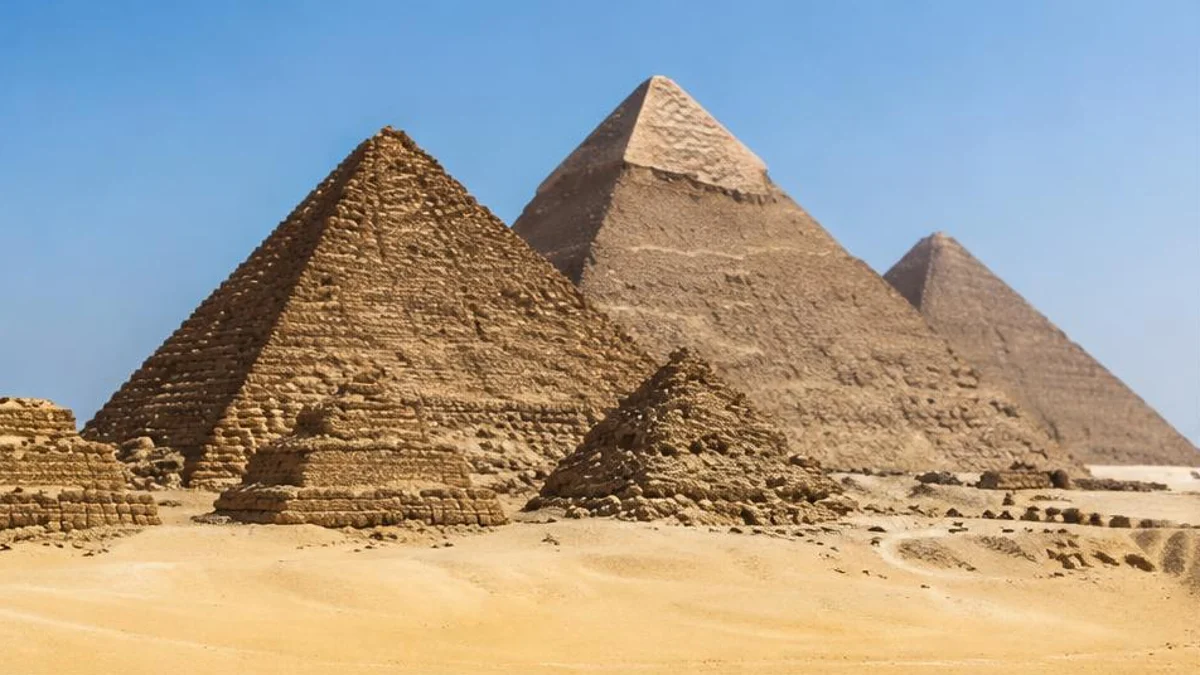
Some papyri give a wonderful glimpse of ancient life and knowledge. The Rhind Mathematical Papyrus, copied around 1550 BCE, contains arithmetic and geometry problems. The Edwin Smith Papyrus describes treatments for injuries in a surprisingly practical, observational way, while the Ebers Papyrus is a large medical text with remedies and spells. Funerary papyri, such as the Book of the Dead of Ani, show spells to guide the dead in the afterlife. The oldest inscribed papyri known so far were found at Wadi al-Jarf on the Red Sea and include the logbook of a man named Merer, who helped transport stone for the Great Pyramid in the reign of Khufu, about 4,500 years ago.
Reading damaged papyri with technology
Many papyri are torn, faded or stuck together. Multispectral imaging photographs a document at different wavelengths of light, revealing ink that is invisible to the eye. At Herculaneum, near Pompeii, hundreds of scrolls were buried by the eruption of Vesuvius in 79 CE and carbonised into hard black lumps that crumble if unrolled. Scientists have used powerful X-ray scanning and machine learning to read faint traces of ink inside unopened scrolls. In 2023, a public competition called the Vesuvius Challenge helped researchers decipher passages from one scroll, offering the prospect of reading a lost library.
Papyrus, parchment and paper
Each writing material had advantages. Papyrus was cheap and light but brittle when folded, which suited rolls more than books. Parchment, made from animal skins, could be folded into durable codices, and it could be scraped and reused, producing palimpsests in which older writing can still be detected underneath. Paper, made from pulped fibres, was cheaper to produce in bulk and gradually replaced both. The shift from scrolls to codices changed how people read, because it made it possible to turn quickly to a page.
Papyrus today
The plant still grows along the Nile and in other wetlands, including in Sicily, where it has been used since ancient times. Craftspeople make papyrus sheets for art and souvenirs by the traditional method, and some modern projects use papyrus in wetland management and for biofuel research. Because of the plant's ancient fame, a sheet of papyrus remains a popular symbol of writing and history.
Frequently asked questions
Is papyrus paper?
Not exactly. Paper is made from pulped fibres, while papyrus is made from layered strips of the plant.
How long could a scroll be?
Some were only a few metres long, while the longest known, the Great Harris Papyrus, is over 40 metres.
Can you still make papyrus?
Yes. Craftspeople still make it, and it is sold as an artistic material.
Why is Byblos connected to the word Bible?
The Greek word byblos meant papyrus and by extension a book. The city of Byblos was an early port for papyrus trade. The plural form biblia, meaning books, led to the word Bible, so the connection is through the material and trade in books.
How old is the oldest papyrus?
The oldest inscribed papyri found so far, from Wadi al-Jarf in Egypt, date to around 2560 BCE, in the reign of Khufu. Older uninscribed pieces may exist, and new discoveries could change the record.
Can papyrus be reused?
Yes. Papyrus could be washed and written over, but the surface was not as durable as parchment, so reuse was less common. Sometimes the back of a used roll was used for a new text, and old documents were turned into cartonnage, a papier-mache-like material for mummy cases.
Sources and further reading

Written by
FactNest Editorial Team
FactNest is operated by Muonix. The FactNest Editorial Team publishes general-interest explainers with AI-assisted drafting and illustrations. Contact contact@muonix.co for questions or corrections; we respond within 2 business days.
More from this author →