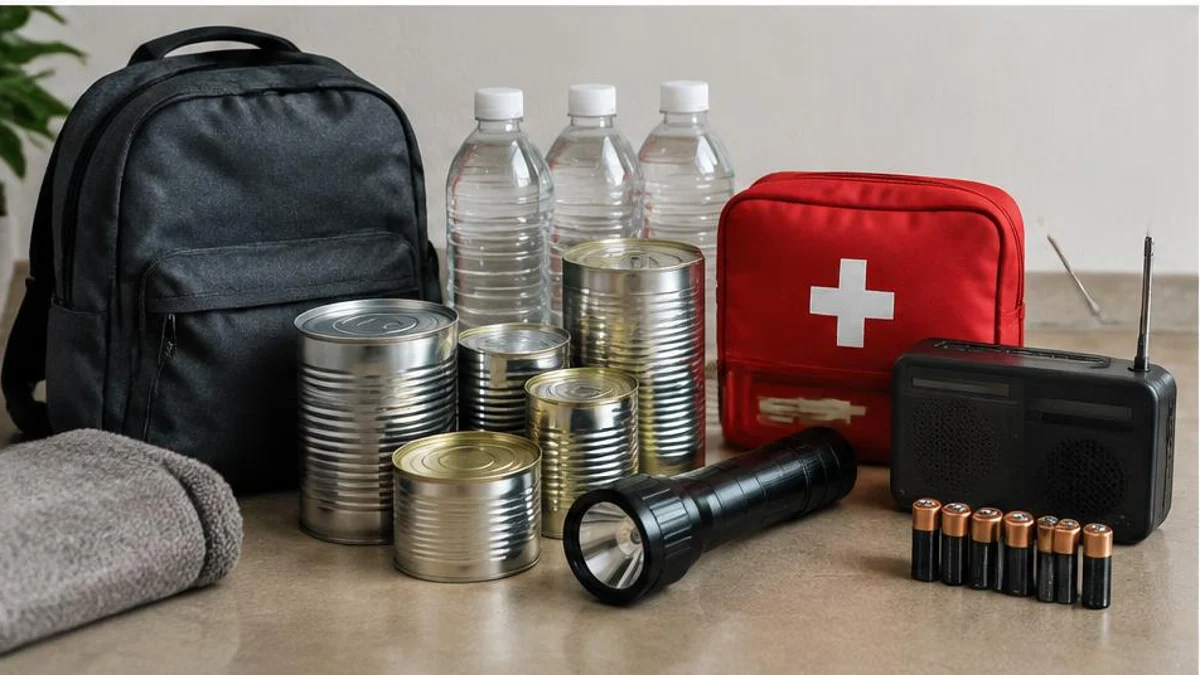
When a storm knocks out the power, a flood closes the roads or an emergency forces you to stay home for a few days, the shops may be shut and services may be interrupted. A basic emergency kit is a small amount of preparation that can make those days much easier. It does not need to be expensive or elaborate. A box or bag of essentials, kept somewhere you can reach it, covers the basics: water, food, light, communication, first aid and the items your household specifically needs.
This guide is general preparedness information. It draws on the US government's Ready.gov guidance, so some details reflect a United States context. Emergency risks, rules and recommendations differ by country and region, so always check the advice of your local emergency management or public safety authorities, and adapt the list to your household.
Key takeaways
- Think of a kit as the supplies for staying at home for several days without power or shops, not as a replacement for an emergency plan.
- Ready.gov suggests about one gallon (roughly 3.8 litres) of water per person per day for several days, covering drinking and basic sanitation.
- Choose ready-to-eat food that does not need refrigeration or cooking, and include a manual can opener.
- Include light, a battery-powered or hand-crank radio, spare batteries, a first aid kit and basic hygiene items.
- Add what your household specifically needs, such as infant supplies, pet items and accessible equipment.
- Keep copies of important documents and a list of contacts in a safe place.
- Check the kit regularly, because food, water and batteries do not last forever.
- Do not use generators, grills or camp stoves indoors, and follow local official advice on water safety.
Start with a plan, then build the kit
A kit works best alongside a plan. Spend a few minutes thinking about:
- What emergencies are likely where you live, such as storms, floods, heat waves, earthquakes or power cuts.
- Whether you might need to stay at home or leave, and what the official advice would be in each case.
- How your household would contact each other if phones or the internet were not working, and where you would meet.
- Anyone who needs extra support, such as older relatives, people with disabilities or those who rely on medical equipment.
A kit does not replace evacuation planning. If you are told to leave, follow local instructions, and a lighter "go bag" with essentials may be what you need.
Water: the most important item
Ready.gov guidance suggests storing about one US gallon of water per person per day, which is roughly 3.8 litres, for several days. This amount is meant to cover both drinking and basic sanitation, such as washing hands. It is a general starting point, not a personalised figure. Some people need more, for instance because of heat, health conditions, pregnancy or breastfeeding, and you may want to store extra for pets.
Practical tips:
- Use clean, food-safe containers made for storing water, or commercially bottled water, and keep them in a cool, dark place.
- Follow the storage dates or advice on commercial products and refresh stored water as recommended.
- If you ever need to treat or purify water, follow current guidance from your local authorities or health agency, because the right method depends on the situation. This article does not give treatment instructions.
Food: ready to eat, no cooking needed
Aim for several days of food that you and your household will actually eat and that is safe without refrigeration or cooking. Examples include:
- Canned meals, vegetables, fruit, beans and fish with easy-open lids or a manual can opener.
- Dry foods such as crackers, cereal, nut butters, dried fruit and trail mix.
- Shelf-stable milk or plant-based alternatives, and foods for any special diets.
- Food for infants and pets, if relevant.
Choose items with a long shelf life, check for allergens and note the "best before" dates. A simple habit is to rotate the food: eat older items and replace them, so nothing sits expired at the back of the box.
Light, power and communication
When the power is out, three things matter: seeing, hearing news, and staying in touch.
- Flashlights or headlamps, with spare batteries. Torches are generally safer than candles, which can cause fires.
- A battery-powered or hand-crank radio to hear official updates if the internet and phones are down.
- Extra batteries in the sizes your devices use.
- A phone charger and a fully charged backup battery pack, and a car charger if you have a vehicle.
- A whistle to signal for help.
- A paper list of key phone numbers, as your phone's contacts may not be accessible.
If you want to know more about how batteries store and release power, see our explainer on how batteries work.
First aid and health
A first aid kit is a core item. Many pre-assembled kits are available, or you can build one. Typical contents include adhesive bandages, gauze, tape, antiseptic wipes, gloves, scissors, tweezers and a basic first aid guide.
For regular prescription medicines or medical supplies, think about planning ahead, not stockpiling on your own judgement. Talk to your doctor or pharmacist about how to make sure you can keep taking what you need during an emergency, and keep a list of your medicines and dosages with the kit. This article does not give advice about starting, stopping or changing any treatment.
Hygiene and household items
Small items make a big difference when normal services are interrupted:
- Soap, hand sanitiser and wet wipes.
- Toilet paper, garbage bags and ties for sanitation.
- Feminine hygiene products, nappies and baby wipes if needed.
- Dust masks to help filter dusty air, where appropriate.
- A basic multi-tool or wrench, in case you need to turn off utilities. Check with your utility company before doing this.
- Blankets or warm clothing, and a change of clothes.
Documents and cash
Keep copies of important papers in a waterproof container or digitally in a secure place:
- Identification and proof of address.
- Insurance policies and bank account details.
- Medical information and a list of allergies.
- Emergency contact numbers.
Some cash in small notes can help, because cash machines and card readers may not work during a power cut.
Special needs: make it fit your household
Every household is different. Add items for:
- Infants: formula, bottles, nappies, wipes and a change of clothes.
- Pets: food, water, medications, a leash or carrier and vaccination records.
- Older adults and people with disabilities: spare glasses, hearing aid batteries, mobility aids and any equipment needed. Plan for how to get help if you rely on powered equipment.
- Different languages or reading needs: keep key information in a form everyone in the household can use.
Safety cautions
A few common-sense warnings are worth repeating:
- Never run a generator, charcoal grill or camp stove indoors or in an enclosed space, including a garage. These can produce carbon monoxide, which is dangerous and can be deadly.
- Do not improvise heating or cooking with unsuitable fuels inside your home.
- Follow official advice about tap water safety, evacuation and shelter.
- Keep emergency numbers handy, and know the correct number to call in your country.
Storing and maintaining your kit
A kit is only useful if it is ready when needed:
- Store it in a sturdy, easy-to-carry container in a cool, dry place that everyone knows about.
- Set a reminder, such as twice a year, to check the kit.
- Replace food, water and batteries as they approach their dates, and update clothing, medicines lists and documents.
- Re-think the contents when your household changes, for example with a new baby or pet.
Frequently asked questions
How much water should I store?
Ready.gov suggests about one gallon, roughly 3.8 litres, per person per day for several days, covering drinking and sanitation. Your needs may be higher.
Do I need special food?
No. Choose food you will eat that is safe without refrigeration or cooking, and include a manual can opener.
How often should I check my kit?
A check every six months or so is a common suggestion, to replace expired items and update it for your household.
Is a kit the same as an emergency plan?
No. A kit supplies the basics. A plan covers how you would communicate, where you would go and what you would do. You need both.
Can I use a barbecue or camp stove indoors if the power is out?
No. These can produce carbon monoxide and are not safe to use indoors or in enclosed spaces.
Sources and further reading
Related reading on FactNest: How to write a clear email that is easy to answer and How batteries work.

Written by
FactNest Editorial Team
FactNest is operated by Muonix. The FactNest Editorial Team publishes general-interest explainers with AI-assisted drafting and illustrations. Contact contact@muonix.co for questions or corrections; we respond within 2 business days.
More from this author →