The price on a product listing is rarely the price you pay. Shipping, taxes, mandatory add-ons, subscriptions and return costs can turn a bargain into an ordinary deal, or an ordinary deal into an expensive mistake. Comparing prices well means comparing the same thing, counting everything you will actually pay and checking that the seller is who they claim to be. None of this requires special tools, just a consistent way of looking.
This guide is general consumer education. It does not recommend any store, brand or deal, and it makes no promises about your legal rights, which vary by country. Where it mentions consumer guidance, it draws on resources from the US Federal Trade Commission (FTC), which applies in a United States context.
Key takeaways
- Compare like with like: same model, condition, quantity, accessories and warranty.
- Compare the total cost at checkout, including delivery, taxes and any extra charges, not just the listed price.
- Use unit prices to compare different pack sizes fairly.
- Check the return policy, who pays for return shipping, and how long a refund takes.
- Treat dramatic "was/now" discounts, countdown timers and star ratings with caution.
- Check who you are buying from before you pay, because fake and misleading sellers exist.
- Price-tracking tools can help but have limits, including incomplete coverage and privacy trade-offs.
Step 1: make sure you are comparing the same thing
Two listings can look identical and still not be. Before comparing prices, check:
- The exact model or version. Similar names often hide different specifications.
- Condition: new, used, refurbished or open box.
- Quantity: one item or a multi-pack.
- What is included: accessories, cables, batteries, bags or software.
- Warranty: length and who provides it, the manufacturer or the seller.
A cheaper price for a slightly different model is not a better deal, just a different product.
Step 2: compare the total price, not the headline price
Many online prices change at checkout. Add up everything you will pay:
- Delivery or shipping charges.
- Sales tax or similar taxes, where they apply.
- Handling or service fees.
- Charges for gift wrapping, insurance or expedited delivery you may have to opt out of.
- Required extras, such as a mandatory membership or an accessory you need to make the item work.
It helps to go as far as the final checkout screen, without paying, to see the total.
A fictional example
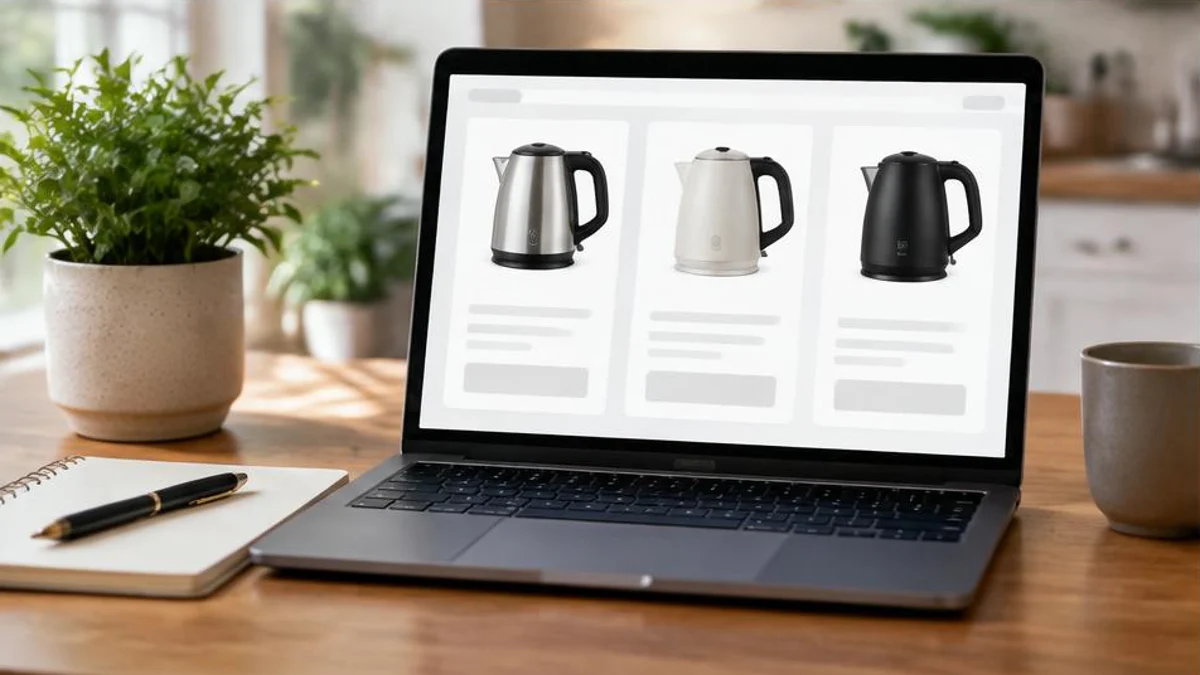
Imagine three listings for the same model of kettle. The shops and prices are made up for illustration:
| Seller | Item price | Delivery | Total |
|---|---|---|---|
| Shop A | $24.99 | $5.99 | $30.98 |
| Shop B | $27.50 | Free | $27.50 |
| Shop C | $22.00 | $9.99 | $31.99 |
Shop C looks cheapest at first glance, but it has the highest total. Shop B, which looks middle of the road, comes out cheapest. The headline price is only part of the story.
Step 3: use unit prices for different sizes
When products come in different pack sizes, compare the price per unit: per 100 grams, per litre, per item or per use. The calculation is simple: divide the price by the quantity.
Another fictional example, comparing two bags of coffee beans:
- Bag 1: 340 g for $8.50. Price per 100 g: $8.50 divided by 3.4 is $2.50.
- Bag 2: 1 kg (1,000 g) for $22.00. Price per 100 g: $22.00 divided by 10 is $2.20.
The larger bag is cheaper per gram, but only worth it if you will use it all before it goes stale. A lower unit price is not a bargain if you throw half away.
Step 4: check returns and refunds
A good price is less useful if returning an item is expensive or difficult. Look for:
- How long you have to return an item.
- Who pays for return shipping.
- Whether items must be unopened or in original packaging.
- How refunds are paid, to your original payment method or as store credit, and how long this takes.
- Exceptions, such as items that cannot be returned.
Policies differ by seller and, in some cases, by country. For anything expensive, it is worth reading the policy before you buy, not afterwards.
Step 5: be cautious with discounts and ratings
Online listings use several techniques to make offers feel urgent or attractive.
- "Was/now" pricing: a crossed-out higher price does not prove the item ever sold at that price. Compare against other sellers instead of trusting the "original" figure.
- Countdown timers and "only a few left" messages: these can create pressure to decide quickly. Pausing to compare is almost always safe.
- Star ratings: a high average does not tell you how many people rated the item, when, or whether the reviews are genuine. Look for detailed reviews that describe real use, and read some of the critical ones. Evidence in the text of reviews is more useful than the stars alone.
Step 6: check who you are buying from
Fake online shops and misleading sellers exist. The FTC's consumer guidance encourages shoppers to know the retailer. Practical checks include:
- Look for a clear business name, contact details and a physical or registered address.
- Search for the seller's name along with words such as "reviews" or "complaints," and treat a lack of any independent information with caution.
- Be wary of prices that seem far too low, and of sellers who ask for unusual payment methods.
- Prefer payment methods that offer some protection if something goes wrong, and keep records of your order, receipts and messages.
- Check the web address carefully for small misspellings that imitate well-known sites.
Rules and protections differ between countries, so check what applies where you live.
Price trackers and comparison sites
Tools that show price histories or compare sellers can help you spot a real discount. They are useful, but keep their limits in mind:
- Coverage is incomplete. A tool may not include every store, and it may miss local or smaller sellers.
- Data can lag. Prices can change faster than a tool updates.
- Sponsored results and affiliate links may influence what is shown.
- Privacy: browser extensions and apps may collect data about what you browse and buy. Read what they ask for permission to do.
Treat them as one input, not the final word.
A simple checklist
Before you buy, run through these questions:
- Is it exactly the same model, condition, quantity and warranty?
- What is the total price at checkout?
- What is the unit price, if sizes differ?
- What is the return policy, and who pays for returns?
- Does the seller look real, and can I find independent information?
- Does the discount make sense when I compare it with other sellers?
- Am I buying because I need it, or because of a timer?
Frequently asked questions
Is the cheapest listing always the best deal?
No. Delivery, taxes, fees, returns and warranty can change which option costs less overall.
What is a unit price?
It is the price per standard amount, such as per 100 grams or per item. It lets you compare different pack sizes fairly.
Can I trust crossed-out "original" prices?
Not on their own. They do not prove that the item sold at that price. Compare with other sellers.
How can I check whether an online shop is real?
Look for clear contact details, search for independent reviews or complaints, check the web address carefully and be wary of prices that seem too good to be true.
Are price-tracking tools reliable?
They can be useful but may miss some stores, lag behind changes and collect data about your browsing. Use them as one source of information.
Sources and further reading
Related reading on FactNest: How to start a budget and How to spot fake news online.

Written by
FactNest Editorial Team
FactNest is operated by Muonix. The FactNest Editorial Team publishes general-interest explainers with AI-assisted drafting and illustrations. Contact contact@muonix.co for questions or corrections; we respond within 2 business days.
More from this author →